





























Therapy has long served as an essential outlet for people struggling with mental health challenges. For many, speaking with a trained professional, and having that face to face human interaction provides the understanding, structure, and strategies needed to cope with life’s difficulties. Over time, therapy has shifted alongside culture, technology, and changing attitudes about mental health, creating new opportunities, and new concerns, for people who rely on it.
As tech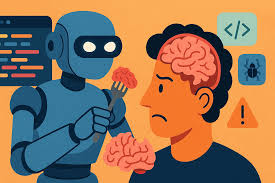 nology has advanced, so has the way therapy is delivered. Once limited to in-person sessions, mental-health support has expanded into video calls, online messaging, and even mental-health apps. These tools have made therapy more accessible for people who might struggle with transportation, scheduling, or finding a local provider. At the same time, therapy has become more personalized. People can now choose between traditional therapy, teletherapy, group support, and mindfulness or behavioral-tracking apps. This shift reflects how our lifestyles have changed-we rely more on digital communication, and mental-health services have adapted to meet people where they are.
One of the newest developments is the use of artificial intelligence to supplement or guide mental-health care. AI tools can analyze patterns in mood logs, suggest coping strategies, remind users to practice healthy habits, or provide real-time responses when someone is struggling. For clinicians, AI can even help with administrative tasks or offer data-based insights that support treatment decisions. There are potential benefits, AI is fast, accessible, and available 24/7. It doesn’t get tired, it doesn’t forget, and it can offer consistent guidance. In some cases, AI may help people identify patterns or prepare information that therapists can then use to give better care.
Despite its growing popularity, AI is not and cannot replace a real human therapist. It lacks empathy, ability to form authentic therapeutic relationships, and real world experience necessary for genuine understanding. Technical issues-such as glitches, outages, or incorrect responses-can also create risks, especially when a person is in distress. AI tools rely heavily on data and pattern recognition, not genuine emotional connection. For many people, therapy works because they feel heard, validated, and understood-something only a real human can provide. This gap raises important questions about when and how AI should be used in mental-health settings.
As AI becomes more involved in emotional support, it has sparked debates about safety, responsibility, and appropriate boundaries. News stories and lawsuits in recent years have highlighted concerns about whether AI tools could respond incorrectly during a crisis, or be misinterpreted as providing-clinical-level care. These conversations continue to shape how mental-health organizations and tech companies develop and regulate AI systems.
Artificial Intelligence can be a helpful supplement-but not a replacement-for traditional therapy. When used responsibly, AI tools may assist with tracking symptoms or daily habits, reminding users of coping skills or strategies, helping clinicians organize information, providing quick support between therapy sessions, but the foundation of mental-health treatment still relies on human connection. People benefit from empathy, compassion, and real conversation, elements that technology cannot fully replace.