



























Whether you watch the news or not, it is very likely that we have all heard about the ongoing war with Iran. Military and political conflict with countries in the Middle East region are not at all new to the United States, as the very first modern US intervention in the area was Operation Blue Bat in Lebanon in 1958 under President Eisenhower. Since then, primarily picking up during George H.W. Bush’s presidency, there have almost always been American soldiers or drones in countries such as Afghanistan, Iraq, Pakistan, Syria, Yemen, Iran, and more. The difference, however, was that when US troops were fighting in Afghanistan, for example, they were fighting in Afghanistan. None of the destruction occurred on American soil, and therefore we as citizens were not directly affected (in the sense of having bombs dropped on us). At the current stage in the war, the only American territory that has suffered demolition has been military, research, and commercial bases in the Middle East, but the potential for fighting to move West is not out of the question. So as the trouble continues, here is some information that is important to understand as American citizens.
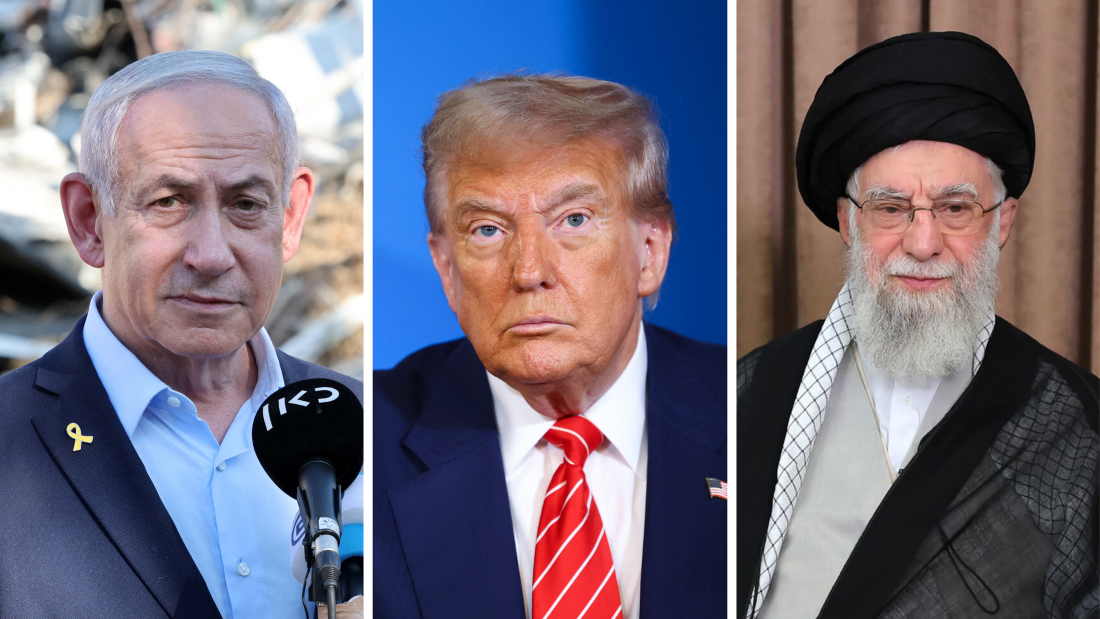
On February 28, 2026, joint American and Israeli forces bombed Tehran, the capital of Iran, along with 1,700 other locations throughout the country– the result of “Operation Epic Fury.” In the process, Iran’s Supreme Leader, Ali Hosseini Khamenei, was killed. A few days later, Iran’s Assembly appointed Mojtaba Khamenei, the son of Ali Hosseini, as the new Supreme Leader. During this time the country’s president, Masoud Pezeshkian, also has some power in the executive ruling of the nation’s government. Since the 28th, a back-and-forth of attacks has occurred, with Iran launching around 500 missiles and 2,000 drones at Israel and other gulf states in response to the American-Israeli airstrikes on military bases, research centers, and, of much concern, The Shajareh Tayyebeh girls’ elementary school in Minab, Iran, the bombing of which killed roughly 150 individuals. From there, volleys of bombings occurred to and from both sides. Notably, Iran destroyed the USN Fifth Fleet service center for the US Navy located in Bahrain. Iran attempted to deploy fighter jets (before they were destroyed by Israel), which prompted the US Airforce to deploy B-2 Spirit bombers armed with 2,000 pound bombs. As the war continues, more drones and bombers are deployed and the deaths pile up–those of civilians, government officials, and now at least 7 U.S. Soldiers. On March 1st, Iran’s IRCS humanitarian organization reported explosions near hospitals in Tehran. As of now, it has been confirmed by the World Health Organization (a neutral organization in this conflict that at least 13 health facilities have been attacked by Israeli and American missiles. Bombing hospitals, a war crime under the IHL and Geneva Convention, was a tactic used by Israel in the Gaza strip as well. The use of the term “war crime,” however, is based on determining the intent of the attacker, which is entirely speculative, since one cannot prove that Israel and the U.S. are deliberately committing these acts of terrorism with collateral effects. We can expect the escalation of these attacks as time goes on, and we must be prepared for the damage to make its way over to the States.
It is very important for context and understanding of the United States’ military action to recognize the loopholes that are used in situations like this. Technically speaking, we are not at war, because Congress never declared war. Alternatively, Congress can impose Authorized Use of Military Force (AUMF), which was put into place in 1964 before the Vietnam war, as well as after 9/11 to allow the US to attack Afghanistan and Iraq. This loophole is why the term “conflict” is often used to replace “war.” Going to war is a lot different on paper than simply having a military conflict, even though they are very similar in practicality, and often used interchangeably. Technically speaking, the US has not “gone to war” since World War II. Despite this terminology error, it is factual to state that there has not been a single year since any of us have been alive where the US has not been involved in a so-called “conflict.” The current war in Iran is noted as a “Preemptive Retaliatory De-Escalation.” However, neither of these legislative actions are accurate for this war, since Congress also did not impose AUMF. Rather, aspects of the War Powers Act of 1973 are being used. This act allows the president 60 days (as well as a 30 day withdrawal period) at any point to engage in unauthorized military action. If, within that 60 days, Congress decides to go along with it and declare war, the military action is authorized. However, if Congress feels that the action is unlawful or unconstitutional, they may override it with a War Powers Resolution, so long as it receives a 2/3 vote (which is exceptionally rare given the division of Congress in a two-party system; Republican congresspeople will not vote against a Republican president’s war and Democratic congresspeople will not vote against a Democratic president’s war). If that vote does manage to go through, however, the president is still able to veto the resolution himself. Using this system, President Donald Trump has taken singular control over the military actions of the US through his role as President and Commander in Chief. Although it is easy to see this as an unconstitutional twisting of checks and balances, it is important to note that the executive decisions made are technically legal at this time. Based on this legal wording, it is interesting to note that Trump’s election in 2024 was partly on the basis of his promise that “I’m not going to start wars. I’m going to stop wars.”
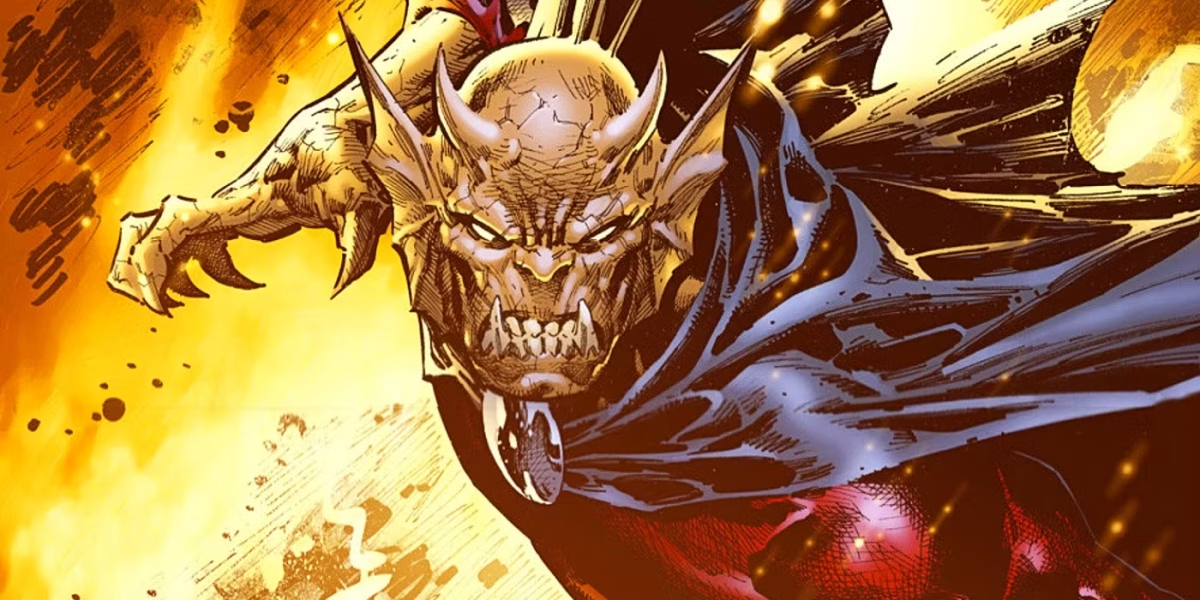
Regarding motives for the attacks, we of course do not know the whole picture. However, a few notable statements can be taken into consideration. The Trump Administration has provided shifting and conflicting answers about the reasoning behind the attacks, but the primary understanding is that the goal is to prevent Iran from gaining nuclear power. In 1992 and many more times since, Israeli Prime Minister Benjamin Netanyahu has claimed that Iran is only “months or years” away from acquiring nukes. This statement has been made for 30 years, and it continues to be said that the threat is “imminent.” It is extremely important to recognize that Israel is the only country in the Middle East that has a nuclear arsenal. However, they operate under “nuclear ambiguity,” by which they neither confirm nor deny having nuclear power. It is known that they do possess these weapons because in 1968 they intercepted and hijacked a German ship, Scheersberg A, through the Plumbat Affair, which resulted in Israel obtaining 200 tons of Yellowcake Uranium, enough for 20 nuclear bombs (it is now estimated to be anywhere from 90 to 200 warheads in total). Donald Trump’s statements regarding the prevention of Iran’s nuclear development labels Iran as a danger to the US if they do develop. He claimed, “Our objective is to defend the American people by eliminating imminent threats from the Iranian regime, a vicious group of very hard, terrible people. Its menacing activities directly endanger the United States, our troops, our bases overseas, and our allies throughout the world.” He further stated that if Iran struck first (which he claims they were going to), the war would be nuclear immediately, which follows the Shoot Second policy that the US has had since the Cold War (specifically, the policy of Flexible Response: Calculated Ambiguity). Furthermore, it is worth considering the Iranian rallies on February 11th at which a statue of the demonic entity Baal, alongside pictures of Donald Trump and the Star of David, was burned in protest of alleged corruption in the West. This event shows significant dislike of both the U.S. and Israel on the part of Iranian citizens. Taking all of the possible motives into consideration, it stands to reason that the primary goal of the war is to prevent Iran from obtaining a nuclear arsenal due to the fear of them being a threat.
The partnership of the United States and Israel is not a new concept, as the US immediately recognized the nation at its founding in 1947. Since then, the support of the country has varied depending on the president’s policies. For example, President John F. Kennedy highly opposed Israel as he demanded nuclear inspection, and called the AZC (now AIPAC) to register under FARA (The Foreign Agency Registration Act). After his assassination, under Lyndon B. Johnson, Israel was considered an ally. This is to say, the status of our relationship has changed, but the status of U.S. partner has been their badge for quite some time now, even after their bombing of the USS Liberty in 1967. AIPAC’s lobbying and financial backing of most of the current administration, and otherwise the government as a whole, heavily aids the support from America, under what is legally defined as a strategic partnership with a Major Non-NATO Ally.
That being said, however, Iran also has the potential to gain itself an ally, as Kim Jong Un, the Supreme Leader of North Korea, states that North Korea is prepared to provide missiles to Iran to use against Israel. North Korea has been a large weapon supplier of Iran since the 1980’s. This escalates the war greatly, because North Korea is in fact a nuclear power. This fact puts nukes on both sides of the board, as the US and Israel both hold them. If Iran and North Korea form an alliance, the administration’s desire to keep Iran from obtaining a nuclear arsenal is essentially failed. It is important to note, however, the result of UN Security Council 1874, which calls for the inspection of all arms-related exports from North Korea, the idea of which is to stop the nation from exporting nuclear weapons, due to their position as a prominent weapons supplier. Because of this fact, it is reasonable to conclude that Iran cannot obtain nukes at their own national military bases from North Korea to use on Israel and America. And while North Korea could very well deploy nuclear missiles on behalf of Iran, it is extremely unrealistic to shoot a missile across the 5,000 mile gap of countries that separates North Korea and Israel (and the same distance across the Pacific Ocean to the U.S.). Despite this fact, it cannot be ignored that the relationship of the U.S. and North Korea is anything but friendly. Since the Korean War, the two nations have been in extreme opposition both militaristically and politically. Given this, it is not all that surprising that Kim Jong Un sought to support the U.S.’s enemy in this war. All of this being said, however, Kim Jong Un has not officially stated any alliance, nor has Supreme Leader Khamenei or President Pezeshkian. All that has been said is that support is on the table.
The reaction of this war is very similar to that of the Vietnam War (often nicknamed the Unpopular War), as an NPR poll shows that a majority of American citizens feel that the conflict is unnecessary and unjust. The timing of the war stands in relation to many other headlines that have led some to question the Trump Administration (such as the Epstein Files Transparency Act and the controversy surrounding ICE), and even use revolution ideology in the statement that when a king feels that his people are about to rebel, he declares war on another country. An extremely significant example of a protest of the war is Brian McGinnis. On March 4th, Raleigh firefighter and Marine Veteran in Iraq Brian McGinnis (a Green Party candidate who is now running for Senate) attended a Senate hearing at the Capitol Building in Washington D.C. (in his Marine Corps uniform), during which he stood up and stated “Nobody wants to die for Israel.” During his statement, Capitol police officers tackled and grabbed McGinnis, pulling him out of the room. As he held on to the door to attempt to keep speaking, Republican Senator Tim Sheehy aided the police, which resulted in McGinnis’ hand and arm breaking. Brian McGinnis was arrested on three counts of assaulting a police officer and three counts of resisting arrest and unlawful demonstration, but he has since been released from jail and from the hospital. Some time before this event, McGinnis had been a part of a Freedom Flotilla in Gaza, an organization which acts to stop the Israeli blockade of food and supplies to Gaza. This blockade is something that was also supported in principle by the U.S., as shown during a 2022 UN human rights council vote on the question of food being a human right, when the only 2 countries that voted “no” were the United States and Israel.
No matter your feelings on the war, the universal emotion is that this is a frightening time for all. It is important to have a feeling of hope backing you in this time, as well as an immense amount of critical thinking and logical skepticism. We live in an age of misinformation and lies, and it is as important now as ever to form your own opinions about the global occurrences that threaten us. As the war goes on and more and more news comes out, it is crucial to act with critical thinking. As a citizen of a nation at war, remember: war is when the government tells you who the enemy is. Revolution is when you decide that for yourself.