
Death is a part of every person’s life, and is a concept that we as humans naturally struggle to deal with. Ultimately, many people can achieve a mindset of accepting death as it is. However, that applies more so to a natural death, such as old age. When it concerns an unnatural death or one of sickness, it is much more difficult for most people to process. These primarily concern accidents (of many kinds), acts of violence, or things such as overdoses or suicide. These are all very difficult topics, and often make people extremely uncomfortable. After reading the title, however, you will know that these particular instances are not exactly what I am talking about. Rather, I plan to discuss the many cases of a person mysteriously dying after giving someone a reason to eliminate them. This could occur in involvement with the CIA, large corporations or industries, or other government programs. From inventors to political voices, anyone who has the potential to make powerful people angry also has the potential to suffer the consequences.

To begin, a tale of two inventors who suffered the same fate. Stanley Meyer was an Ohio resident who claimed to have invented a water fuel cell capable of powering a car (or at least a dune buggy). Meyer is not the only person to have theorized or claimed to invent a water-powered car, as the idea has grown in popularity as oil alternatives become more sought-after. The idea of these cells is to bisect a water molecule back into Hydrogen and Oxygen gas, which can then take the conventional route of an internal combustion engine by combusting into water vapor. Meyer faced several accusations of fraud in 1996 after expert witnesses concluded that there was nothing special about Meyer’s car, and that he was just using the method of electrolysis (which is commonly deemed to be unsuccessful). Meyer’s death occurred during a meeting with two Belgian investors on March 20, 1998. Meyer ran outside suddenly claiming “they’ve poisoned me!” before collapsing onto the ground. The investigators with the police and coroner’s report ruled that Stanley Meyer died of a cerebral aneurysm. Interestingly, Philippe Vandemoortele, one of the investors, claimed afterward that he had been working with Meyer for a very long time and even considered him a personal friend. He stated that he didn’t know where the rumors surrounding his death came from.
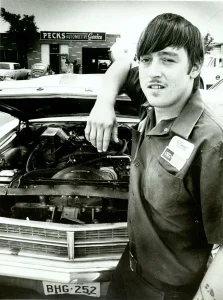
The second inventor with such a story is Tom Ogle. At 24, while working on his lawnmower in El Paso, Texas in the 1970s, Ogle accidentally punctured the fuel tank. Simply out of an inventor’s curiosity, he removed the mower’s carburetor and connected the carburetor inlet to the fuel tank using a hose. This allowed the mower to run off of gasoline vapors, rather than the gas itself. Ogle stated that the mower ran for 96 hours straight. After many failed attempts, he successfully replicated this experiment with his own 1972 Ford Thunderbird. Reaching 60,000 miles at 100 miles to the gallon, Ogle embarked to improve the system and completely remove the carburetor, replacing it with a set of filters and hoses. He later used the system to modify a 1970 Ford Galaxie, and drove it 205 miles on only 2 gallons of gas. The difference between Tom Ogle and Stanley Meyer’s stories is that when his “Oglemobile” was inspected by expert engineers, they found that he was telling the truth about what was present in the car. There was no hidden carburetor or secret motor or anything of the sort. His technology was successful, being compared to the only semi-successful design of the same idea by Canadian inventor Charles Nelson Pogue. Ogle worked with many possible investors and potential buyers, and there was even an alleged case of Shell Oil company offering to buy it for $25,000. Ogle refused after learning that they intended to hide the invention (being an oil company who makes more money if this design never sees light). Soon after, many legal troubles surrounded Ogle as the government came after him through groups such as the IRS and the SEC. Then, on April 14th, 1978, Tom Ogle was shot by a stranger outside of a bar, but miraculously survived after being taken to the hospital. That is, until a short time later, on August 19th, 1981, when he died at a friend’s apartment. The death was ruled as an overdose due to heavy amounts of alcohol and close to 20 pills of Darvon, a painkiller. Due to the fact that he had no drug history, his friends, family, and attorneys all agreed that these were assassination attempts, the last one of course being successful.
Regarding the discoveries of these such inventions, a 2014 article by Cynthia Cuevas stated, “Why are we still oil-dependent when the technology exists to free us from this tyranny? Tom Ogle appeared to have solved the problem of gas guzzlers and going to war to protect our oil supplies, but it was not to be. However, the fact that intelligent thinkers are still asking questions and researching the subject gives one a little spark of hope” (Cuevas).
Inventors aren’t the only people who die mysteriously, however. Journalists and whistleblowers also hold that title highly. A “whistle-blower” is someone who calls to light the negative happenings of a company, individual, group, etc. This often occurs in the form of a disgruntled former employee calling out their employer for something such as corruption, a crime, or just a general negative practice that affects the consumers. Journalism comes into play here because that is ultimately what a journalist works to do, to bring to light things that are wrong. The danger in this is that the person or people whom you call out aren’t going to be very pleased with that. And if they know the right people or have enough money, they can take you out and put whatever cover behind it that they want. That’s what this has been about this entire time: displeasing people who are above the law so much that they’ll kill you over it.
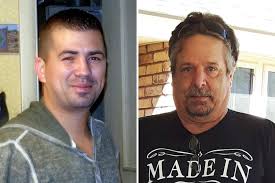
One infamous case of this is that of two men who came out against the Boeing plane company, John Barnett and Joshua Dean. Both of these men spoke out against Boeing’s production standards, and how the company prioritized getting planes out and making money rather than patiently and securely making sure that everything was as it needed to be for full safety potential. John Barnett worked at Boeing for 30 years before he retired in 2017. From 2019 up to his death in 2024, Barnett was testifying and giving evidence in a lawsuit against Boeing that came from improper safety procedures on the planes. He spoke of issues in the oxygen systems and sub-standard production-line construction. During the trial, he failed to show and was found dead in his truck in the parking lot of the hotel he was staying at. His death was ruled a suicide. Shortly after this ruling, one of Barnett’s close friends came out and testified that he, in prediction of his own death, stated: “If anything happens to me, it’s not suicide.” That quote has caused many people who speak out in various contexts to state the same thing. When speaking up against wrongdoing causes one to fear for their own life, it shows a clear issue.
Only weeks later, Joshua Dean was found dead after having spoken out about the same manufacturing problems, specifically about the Boeing 737 Max, which had an incident regarding an emergency exit door flying off in the air. While Barnett retired, Dean was fired, presumably for this exact reason. His death was ruled as being caused by an MRSA bacterial infection, which can reportedly kill within 24 hours of infecting a person. It took 2 weeks of Pneumonia for the virus to kill Dean. A third whisteblower is Sam Salehpour, who is still alive, but has spoken about his fear after testifying before Congress.
Another company who faced whistle-blowing was Open AI, owner of ChatGPT. Suchir Balaji brought forth documents regarding copyright violations on behalf of Open AI, regarding the company “training off of other systems and then competing with them.” He was found dead in his apartment shortly after. The death was ruled as, you guessed it, a suicide. Suspicion immediately arose, however, due to the fact that his apartment looked as though it had been ransacked, there were signs of extreme struggle, and blood was found in multiple rooms. In addition, Balaji had just returned from hanging out with his friends and was reported as being very happy.
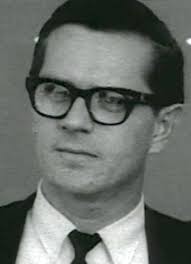
Companies such as Boeing and Open AI aren’t the only ones who face call outs, though. Even NASA has been caught up in such things. Thomas Baron was a safety and quality inspector who went to NASA to search and inspect during the Apollo missions. He wrote a report gathering information from September of 1965 to November of 1966 to determine the likelihood of putting a man on the moon. In that 50 page report (which he later extended to 500 pages), he noted issues such as a lack of communication and improper work and systems records. An Apollo Report (also titled The Baron Report) can be found on NASA.gov, and I encourage you to view the particular cases which Baron brought up. Unfortunately, he did not live to see the moon landing, as he died on April 27, 1967 (six days after vastly extending the report. The extended report was never made public and has since vanished) when his car was struck by a train with his wife and stepdaughter inside. Rather than being classified as an accident, his death was ruled as a suicide. That then has implications involving why he would include his family as well, which were not looked into. Two years later, NASA put three men and an American flag on the surface of the moon (and even managed to call the president all the way back on earth using a landline telephone), and there wasn’t a single issue or suspicious detail regarding the project. NASA has since claimed that we no longer have the technology to return to the moon, because it “wasn’t preserved.”
Gary Webb was not a whistleblower but rather a journalist, who even won a Pulitzer Prize for his previous work. He reported on the CIA’s direct involvement with a drug ring in Northern California. That was a big deal, since the CIA was meant to be taking down the ring and was instead partaking themselves in their cocaine. Gary Webb died afterward via two gunshots to the head, and his death was ruled as a suicide. I’m no mathematician, but I don’t know how you can shoot yourself in the head twice. Another journalist is Daphne Caruana Galizia, a writer for the Panama Papers. Galizia was a heavy activist against corruption in Malta in many politicians including the then-Prime Minister. She even went global, reporting on the off-shore accounts used for money laundering and other monetary forms of corruption by government officials and other important figures all over the world. Her leak of these records and documents was known as the Panama Papers Scandal. She was killed by a car-bomb shortly after bringing these crimes and corruption to light.
Back on the invention track, there are a multitude of scientists who, in a desire for free energy created various power sources such as plasma batteries, cold fusion, and other safe nuclear energy sources. Dmitry Petronov is one of those men. He developed a plasma battery that powered his house for 14 months. Rather than a suicide or an accident or anything of the sort, Petronov simply disappeared on his way to a bakery and was never seen again. Eugene Mallove was another scientist, specifically one who specialized in the idea of cold fusion. He was murdered in one of his rental properties in Connecticut.
Further names include people such as Francisco Pavón, Ezzat G. Bakhoum, Paul Pantone, Andrew Kazolnikov, Todd Gestein, Frank Olson, Arie DeGeus, Mark Tomion, Nuno Loureiro, Stefan Marinov, and even more (I encourage you to look into all of these to see the common pattern). That is far too many names to have to list regarding unjust killings. All of these individuals were researching free energy breakthroughs, and met tragic and suspicious ends. We must ask ourselves why and how. A single occurrence of something like this may be a coincidence, but we’re talking about dozens of people cumulatively that all share the same story, and all point towards one conclusion: There is something going on that is much larger and much more sinister than any of us are prepared for, whether it involves national governments, “big oil” companies, or even some group that we aren’t even aware of. It is easy for some people to brush all of this aside under the negative connotation of “conspiracy.” But where is the line between conspiracy and logical skepticism. This particular instance does not boil down to conspiracy; it is a statistical conclusion. In other words, “Just look at the numbers!” Once again, once is a coincidence, twice is a conspiracy, and this many times is a problem.
I understand that this has been quite a lengthy article, but for any reader that has made it to the end, I encourage you to look at presented stories with logical skepticism. More importantly, do your own research rather than accepting everything that the media shoves down our throats. In a world of corruption, legal loopholes, untrustworthy history, and suppressed truth, it is easy to feel that we as “lowly citizens” can’t do anything about this. But that is not true. We can learn, spread the message, and get people thinking critically. Because if we (as the generation coming to power to clean up the previous ones’ mess) don’t do anything, who will?
Sources
- https://tcct.com/news/2020/11/the-mysterious-death-of-stanley-meyer-and-his-water-powered-car/?srsltid=AfmBOooAUwuju8_Ythq2NLJGAwGwiaQ-mXtDUYRav3QZcrRNvmCXqXOB
- https://cdn.technologynetworks.com/ep/pdfs/stanley-meyer-designs.pdf
- https://epcc.libguides.com/c.php?g=754275&p=5406552
- https://www.bbc.com/news/business-68534703.amp
- https://www.theguardian.com/business/article/2024/may/02/second-boeing-whistleblower-dies
- https://www.theguardian.com/technology/2024/dec/21/openai-whistleblower-dead-aged-26
- https://www.klemchuk.com/ideate/openai-whistleblower-suchir-balaji-dead
- https://www.nasa.gov/history/Apollo204/barron.html
- https://www.orlandosentinel.com/1986/02/10/shuttle-workers-say-they-are-afraid-to-talk-about-challenger/
- https://journals.scholarpublishing.org/index.php/AIVP/article/view/19706
- https://www.britannica.com/biography/Gary-Webb
- https://assassination.globalinitiative.net/face/daphne-caruana-galizia/
- https://www.icij.org/investigations/panama-papers/
- https://hotcopper.com.au/threads/the-mysterious-fate-of-free-energy-inventors.8639255/
- https://vault.fbi.gov/eugene-mallove/eugene-mallove-final/view
- https://thebulletin.org/2016/07/the-life-and-brutal-death-of-a-cold-fusion-crusader/
- https://www.linkedin.com/pulse/mysterious-deaths-inventors-were-silenced-unveiling-will-owens-tlpke
- https://www.thereluctantactivist.org/suspicious-deaths.html