

















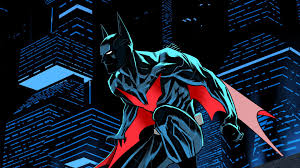
In 1999, DC, in partnership with Warner Brothers, released a new animated TV series with an original character named Terry McGinnis. It takes place in the future (2039, specifically) in a technologically advanced, Sci-Fi version of Gotham City, now renamed Neo-Gotham. The show aired 52 episodes across three seasons from January 1999 to December 2001. It also had a tie-in movie titled “Batman Beyond: Return of The Joker” in 2000. The show was a continuation of the story from Batman: The Animated Series (1992) that takes place after Bruce Wayne has become too old to continue as Batman. In the show, Bruce Wayne continues to be voiced by Kevin Conroy, the same voice actor who was famous for his performance in the Animated Series. The showrunners from The Animated Series, Bruce Timm and Paul Dini, were the same minds behind Batman Beyond, along with Alan Burnett.
The plot revolves around Terry McGinnis, a teenage delinquent at Hamilton Hill High School, discovering the Batcave and taking the Batman suit (a new, futuristic version of it with an all black base, no cape–but rather red wings that take form under the arms on command, a mask that covers his entire face, and a new red logo). A 90 year old Bruce Wayne, who recently sold his company and now spends his time in his manor not doing a whole lot, discovers that Terry has taken the suit, and reluctantly offers for him to become the new Batman (under the guise of being Bruce Wayne’s personal helper). We follow Terry as he tries to balance school and teenage life with his friends with the responsibilities and struggles of being Batman. On top of that, new villains like Inque, Blight, and Shriek, as well as and groups of thugs who call themselves The Jokerz are all causing trouble in Neo-Gotham and putting people in danger. As the show goes on, Terry faces different struggles, both as Batman and as a student, and we see an almost father-son relationship begin to form between Bruce and Terry.
One might notice that the idea of a teenage superhero, as it is addressed in this show, is very similar to the attributes and character qualities of the various interpretations of Spider-Man. One would be correct. Initially, Batman Beyond was heavily inspired by Spider-Man, and possibly made to compete with the success of the character. It can be observed throughout lots of superhero media in the last few decades that teenage or young superhero characters are extremely popular. This is likely due to the relatability of the characters to the target audience. Young viewers see young heroes and believe that they can do great things too, because these heroes are just like them. So while I don’t entirely believe that the idea of a teenage superhero belongs solely to Jack Kirby and Steve Ditko for Spider-Man, it is undeniably factual that Terry McGinnis was inspired by Peter Parker. However, so far as it relates to their actual personalities and character developments, the characters differ greatly. Terry is a troublemaker who has trouble controlling his emotions, often getting in trouble at school and outside of it. In addition, the primary difference lies in his identity as the “New Batman.” Batman Beyond is what is known as a “Legacy Character,” which means that he is a younger individual who takes on the role of a past hero after they are no longer able (for whatever reason). Other Legacy characters include Jaime Reyes as Blue Beetle after Ted Kord and Wally West as The Flash after Barry Allen. Some also consider the older versions of the many Robins as Legacy characters such as Nightwing or Red Robin.
An interesting thing about Batman Beyond (that is not unique by any means) is getting to see what the creative minds of 1999 thought that the future was going to look like. Technology has developed so significantly in the 26 years since Batman Beyond debuted that the ideas that people had for the future are now wildly inaccurate. On the other hand, some technology isn’t in sight yet, so their expectations for our day are beyond (pun intended) what we have reached. 2039 is getting close, and Neo-Gotham’s lifted monorail system, hovering cars, and entirely digital money system doesn’t look like it’s going to happen by then. Of course, so much can change in a few years that any prediction for the future will be a little off. People today even have their own ideas about what the future will look like in another 50 years. Some may be accurate and some not, but we can’t ever be exact.
Batman Beyond and the world within did not stay only on the TV screen, however, as many different comic book iterations have been made since the show’s creation. In 1999 after the show’s positive review from viewers, DC published Batman Beyond #1, starting a six-issue miniseries based on the show. After that, many other series have been made such as a 24-issue series running from 1999 to 2001, the “Hush” arc in 2010, and an eight-issue miniseries in 2011. A short-running series titled Batman Beyond Unlimited was later released, followed by Batman Beyond 2.0 in 2013. Batman Beyond: Neo Year is one of the most recent storylines, which follows Terry after Bruce’s death. The comics are very highly rated and provide more content for fans after the show’s early end after 3 years. It also allows fans who weren’t alive at the time to experience more modern takes of the character and world in addition to the show.
Batman Beyond is one of my favorite TV shows, as well as Batman: The Animated Series, and I couldn’t recommend them more. And while I haven’t read all the comics, I am making them very high priority on my long list of to-read comic books. Batman Beyond has provided a new look at an old and ever-changing character that gives younger fans a superhero to relate to. So if ever you find yourself accidentally breaking into a 90 year old retired billionaire’s secret vigilante hideout (as one does), be sure to make sure the legend lives on through you.